
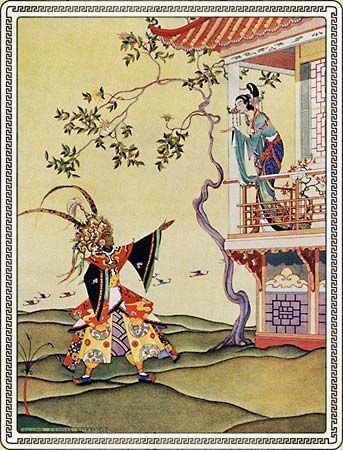
The Thousand and One Nights, Vol. I.
The Thousand and One Nights, also known as the Arabian Nights, is a collection of ancient Middle Eastern and South Asian stories and folk tales compiled in Arabic during the Islamic Golden Age. The stories are often set in India, Persia, China, and Arabia and are told by a female narrator, Scheherazade, who attempts to delay her execution by telling a series of stories to her husband, the King Shahryar. The original stories were written in Arabic, and the tales have been translated into many languages, including English.
Summary of the Book
The Thousand and One Nights, Vol. I. is a compilation of stories, folklore, and moral lessons that have been passed down through generations. Most of the stories are set in an Arabian setting, with the main characters often being of Arabian origin. The characters in the stories often face difficult moral dilemmas and must choose between following the teachings of their religion and doing what is right for their family and friends. The stories often revolve around the themes of loyalty, friendship, and courage, and offer lessons about the consequences of selfishness, greed, and pride.
The stories are narrated by Scheherazade, a young woman who has been chosen by the King Shahryar to be his bride. In order to delay her execution, Scheherazade tells the King a new story each night for 1001 nights, with each story having a moral lesson at its core. The stories told by Scheherazade are often humorous, exciting, and thrilling, and they often involve magical creatures, such as genies and djinns. They also often involve brave heroes and powerful villains, as well as kings, queens, and other important characters.
Main Curiosities and Interesting Facts
- The Thousand and One Nights is a collection of stories from many different countries and cultures. The stories were originally written in Arabic and were later translated into many other languages, including English. The stories are set in various countries and cultures, such as Arabia, Persia, India, and China.
- The stories often involve magical creatures and powerful villains. The stories often feature supernatural creatures, such as genies and djinns, as well as brave heroes and powerful villains. The stories also often involve kings, queens, and other important characters.
- The stories are meant to teach moral lessons. The stories often revolve around the themes of loyalty, friendship, and courage, and offer lessons about the consequences of selfishness, greed, and pride.
- The stories have been adapted into many different forms of media. The stories of The Thousand and One Nights have been adapted into many different forms of media, including movies, television shows, video games, and comics. The stories have also inspired many works of literature, such as the famous novel The Arabian Nights by Sir Richard Burton.
Frequently Asked Questions (FAQs)
Q: What is The Thousand and One Nights?
The Thousand and One Nights is a collection of ancient Middle Eastern and South Asian stories and folk tales compiled in Arabic during the Islamic Golden Age. The stories are often set in India, Persia, China, and Arabia and are told by a female narrator, Scheherazade, who attempts to delay her execution by telling a series of stories to her husband, the King Shahryar.
Q: What is the main theme of The Thousand and One Nights?
The main themes of The Thousand and One Nights are loyalty, friendship, and courage. The stories often revolve around the consequences of selfishness, greed, and pride and offer lessons about the importance of being true to oneself and one’s friends.
Q: Who wrote The Thousand and One Nights?
The stories of The Thousand and One Nights were originally compiled in Arabic during the Islamic Golden Age. The stories were written by many different authors and have been translated into many languages, including English.
Q: What are some adaptations of The Thousand and One Nights?
The stories of The Thousand and One Nights have been adapted into many different forms of media, including movies, television shows, video games, and comics. The stories have also inspired many works of literature, such as the famous novel The Arabian Nights by Sir Richard Burton.